

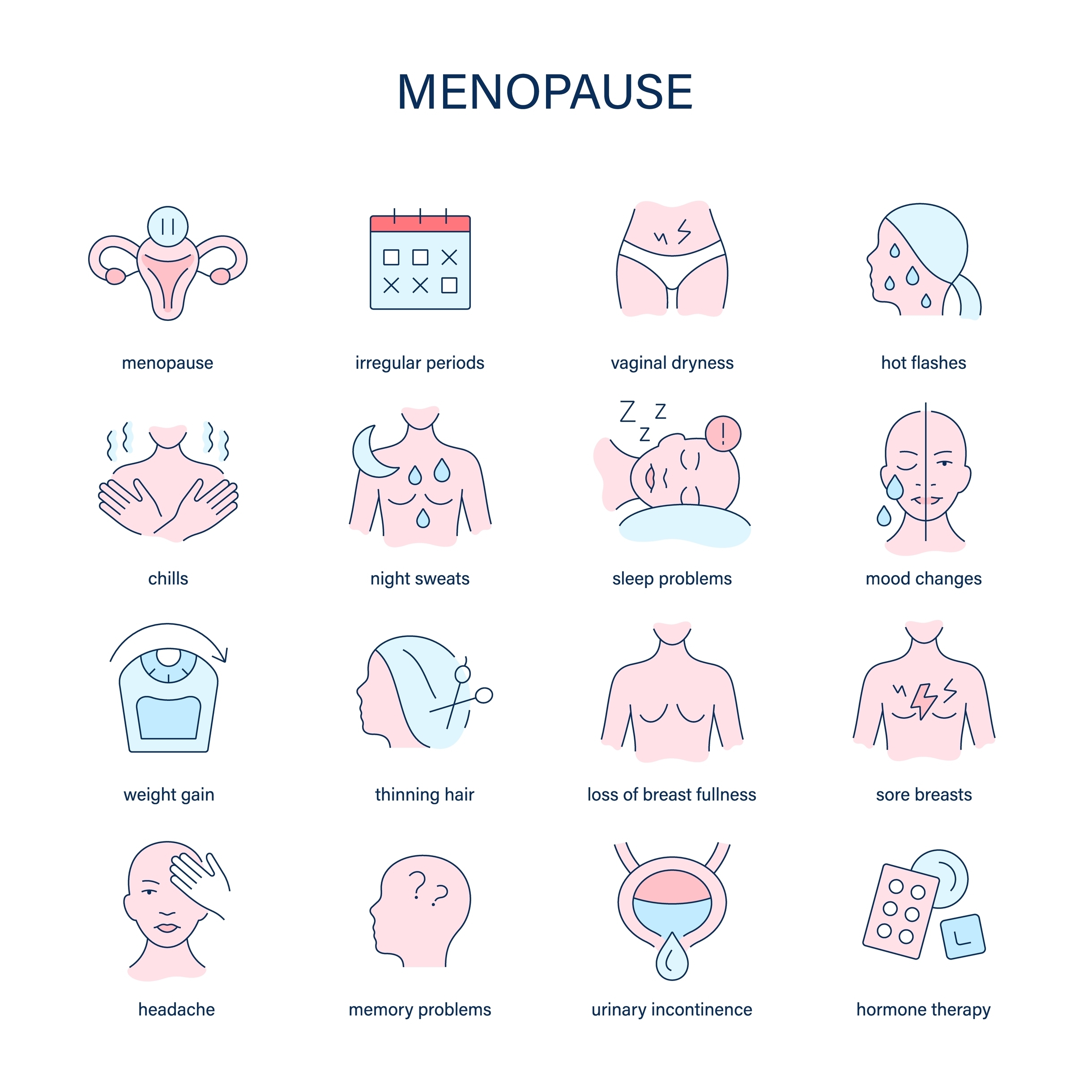
Why do pain symptoms increase with menopause?
Between 40-60% of perimenopausal and menopausal women have musculoskeletal pain and inflammation. Oestrogen has an anti-inflammatory and immunosuppressive effect. It also helps to inhibit pain pathways in the spinal cord, which reduces your perception of pain. So when the levels of oestrogen fall during menopause, pain, inflammation and rheumatic disorders may increase.
Osteoporosis (brittle bones) incidence increases after menopause, but on its own does not cause pain. Pain only occurs if a stress or crush fracure occurs either spontaneously or due to a fall or other injury.
Where fat is stored in your body changes with menopause. Fat starts to be stored in more metabolically active areas such as your abdomen rather than the typical thighs and hips. Visceral and abdominal fat has a stronger inflammatory effect on your body than fat stored on your thighs and hips. So this may also add to general inflammation in your body and give you more pain.
As menopause can have such wide ranging effects on your body, it is important for this to be taken into account when you present to your GP with new musculoskeletal symptoms. If it is not fully taken into account, there may be over investigation and misdiagnosis of your new symptoms.
What can you do about musculoskeletal symptoms related to menopause?
Hormone replacement therapy (HRT) can help with some of the symptoms as it increases the levels of oestrogen in your body. Newer bioidentical oestrogen patches have less side effects than older oral HRT. It does not raise the risk of breast cancer or blood clots like older oral medications could.
Interestingly, HRT does not seem to help the symptoms of rheumatoid arthritis or psoriosis, which are more likely to start or get worse during early menopause. HRT may help with the symptoms of fibromyalgia. Fibromyalgia does not appear to be caused by menopause, but around 20 % of people with fibromyalgia have symptoms which start during menopause.
If you have systemic lupus erythematosus (SLE), the symptoms tend to reduce with menopause.
HRT helps to maintain bone density and reduce the risk of spontaneous or traumatic fractures.
Reducing alcohol and smoking may help to reduce the symptoms of menopause. It does help to maintain bone density and reduce fractures.
Increasing general exerise may help with menopausal symptoms.
There is evidence that improved nutrition during menopause can help prevent diseases associated with menopause but there is limited evidnce for reducing musculoskeletal symptoms.
References:
Alexopoulos N, Katritsis D, Raggi P. Visceral adipose tissue as a source of inflammation and promoter of atherosclerosis. Atherosclerosis. 2014 Mar;233(1):104-12. doi: 10.1016/j.atherosclerosis.2013.12.023. Epub 2014 Jan 7. PMID: 24529130.
Gkouvi A, Kontouli KM, Pardali EC, Patrikiou E, Lambrinoudaki I, Goulis DG, Bogdanos DP, Grammatikopoulou MG. Fibromyalgia and menopause: Friends with benefits? Maturitas. 2026 May;208:108899. doi: 10.1016/j.maturitas.2026.108899. Epub 2026 Mar 3. PMID: 41785644.
Godos J, Giampieri F, Chisari E, Micek A, Paladino N, Forbes-Hernández TY, Quiles JL, Battino M, La Vignera S, Musumeci G, Grosso G. Alcohol Consumption, Bone Mineral Density, and Risk of Osteoporotic Fractures: A Dose-Response Meta-Analysis. Int J Environ Res Public Health. 2022 Jan 28;19(3):1515. doi: 10.3390/ijerph19031515. PMID: 35162537; PMCID: PMC8835521.
Harding AT, Heaton NS. The Impact of Estrogens and Their Receptors on Immunity and Inflammation during Infection. Cancers (Basel). 2022 Feb 12;14(4):909. doi: 10.3390/cancers14040909. PMID: 35205657; PMCID: PMC8870346.
Money A, MacKenzie A, Norman G, Eost-Telling C, Harris D, McDermott J, Todd C. The impact of physical activity and exercise interventions on symptoms for women experiencing menopause: overview of reviews. BMC Womens Health. 2024 Jul 13;24(1):399. doi: 10.1186/s12905-024-03243-4. PMID: 39003439; PMCID: PMC11245773.
Moskowitz D. A comprehensive review of the safety and efficacy of bioidentical hormones for the management of menopause and related health risks. Altern Med Rev. 2006 Sep;11(3):208-23. PMID: 17217322.
Vikram Talaulikar. Royal Society of Medicine Conference on Bridging Movement and Medicine. Sports Rheumatology and Rehabilitation. 4th of Septemnber 2026.
Yanachkova V, Vasileva-Slaveva M, Kostov S, Yordanov A. Reconsidering Hormone Replacement Therapy: Current Insights on Utilisation in Premenopausal and Menopausal Women: An Overview. J Clin Med. 2025 Oct 10;14(20):7156. doi: 10.3390/jcm14207156. PMID: 41156026; PMCID: PMC12565178.


Leave A Comment